
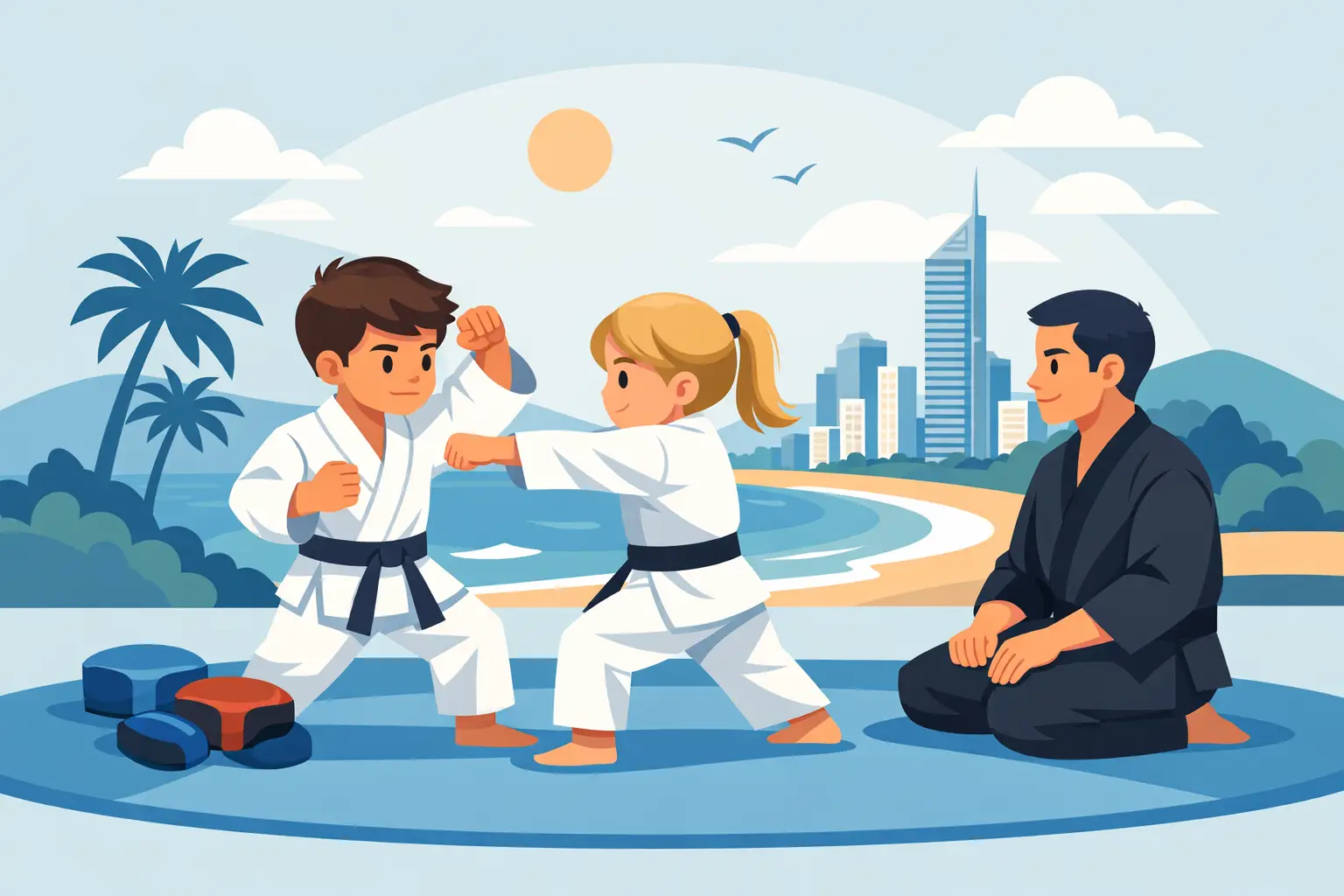
A child who feels unsure in the playground does not need to be taught to fight. They need the confidence to stand tall, use their voice, make sensible choices and seek help early. The right children’s self-defence classes Gold Coast families choose should build those skills alongside fitness, coordination and respect for others.
For parents, self-defence is often about much more than a handful of techniques. It is about giving children a positive place to grow – away from screens, guided by capable adult role models, and surrounded by peers working towards shared goals. Martial arts can provide that structure when training is age-appropriate, carefully supervised and focused on long-term development.
Practical self-defence starts before physical contact. Children need to recognise uncomfortable situations, trust the feeling that something is not right and understand that getting away safely is always the priority. This can mean creating distance, speaking clearly, moving towards trusted adults and knowing when to report a problem.
Physical skills have a place, but they should be taught with care and context. A young child may practise balance, safe falling, simple escapes and how to protect their personal space. Older children and teenagers can gradually develop more technical striking, grappling, throwing and ground-wrestling skills as their maturity, control and understanding grow.
Just as importantly, good instruction makes a clear distinction between self-defence and aggression. Children learn that martial arts are not for showing off, starting conflicts or proving who is toughest. They are taught to stay calm, avoid unnecessary confrontation and use their training responsibly.
This approach can be particularly valuable for children dealing with bullying. No class can promise to prevent every difficult social situation, and bullying should always be addressed with the school and relevant adults. However, a child who carries themselves with confidence, speaks assertively and knows how to ask for help may feel less isolated and more prepared to respond constructively.
A quality class gives children regular opportunities to practise effort, patience and self-control. Progress does not happen from one big lesson. It comes from turning up, listening, trying again after a mistake and noticing small improvements over time.
That process can carry into school, sport and home life. A child who learns to concentrate during partner drills may find it easier to follow instructions elsewhere. A child who has worked steadily towards a new belt or skill can begin to understand that challenges are not signs to give up. They are part of learning.
Physical activity matters too. Children spend plenty of time sitting at desks, in cars and in front of devices. Martial arts classes offer purposeful movement: running, footwork, controlled pad work, strength-building exercises, mobility and games that develop coordination. For many children, it is a more engaging alternative to exercise that feels repetitive or overly competitive.
The social benefits are equally meaningful. Training alongside others teaches children how to take turns, partner safely, encourage classmates and handle both winning and losing with good character. In a welcoming academy, children can form friendships across different schools and age groups while feeling part of a respectful community.
Not every program has the same purpose, so it is worth watching a class before committing. The best fit depends on your child’s age, personality and needs. A high-energy child may benefit from clear routines and opportunities to channel their energy. A quieter child may need patient encouragement and time to settle in before they feel comfortable participating.
Look first at how instructors manage the room. Children should be actively supervised, grouped in ways that make sense for their stage of development and corrected without being embarrassed. Clear boundaries, positive reinforcement and consistent expectations create a safer learning environment than shouting or pressure ever will.
Ask whether the curriculum changes as children grow. Early-learning students need lessons built around listening, movement, confidence and simple safety concepts. Primary school children can take on greater technical detail and responsibility. Teenagers often need a more challenging outlet, with realistic self-defence awareness, fitness and skills that hold their interest as they become stronger and more independent.
It is also useful to consider the range of training available. A program based only on one type of movement can still be enjoyable, but a broad martial arts education gives children a more rounded foundation. Karate can develop striking technique, posture and discipline. Brazilian Jiu Jitsu introduces control and problem-solving on the ground. Wrestling and throwing build balance and body awareness, while Muay Thai can develop focused pad work, fitness and controlled striking for suitably mature students.
Cross-training does not mean overwhelming children with advanced techniques. It means teaching the right material at the right time, then helping students understand how skills connect. They learn to move well, protect themselves, stay balanced and respond with control rather than panic.
Parents should expect classes to be physically active, but safety should guide every part of the session. Beginners need to be welcomed without being thrown into contact they are not ready for. Partner activities should be matched and supervised, with instructors showing children how to practise respectfully.
A good academy also makes room for different confidence levels. Some children take to group activities immediately. Others need a few sessions to observe, ask questions and build trust. Neither response is a problem. Consistent coaching and a supportive class culture give children the chance to progress at their own pace while still being gently challenged.
The first few lessons are often about familiarity. Children learn where to line up, how to listen for instructions, what respectful behaviour looks like and how to work safely with a partner. These details may seem small, yet they are the building blocks of discipline and belonging.
As confidence grows, children usually become more willing to attempt difficult tasks. They may speak louder when answering a question, take more pride in their uniform or practise a new movement at home. Parents often notice changes in posture, resilience and willingness to persevere before they see technical martial arts progress.
There will also be hard days. A child may feel frustrated when a technique does not work or disappointed after missing a goal. That is where thoughtful coaching matters. Rather than shielding children from every setback, instructors can help them reset, take feedback and try again. Learning to recover from a difficult moment is one of the most practical forms of confidence a child can build.
At Southern Cross Martial Arts, this developmental approach is supported through age-specific training and a practical mix of traditional karate, self-defence, Brazilian Jiu Jitsu, wrestling, throwing and striking. The goal is not to make every child the same. It is to help each student become more capable, focused and resilient through consistent training.
Parents can support progress without turning martial arts into another source of pressure. Ask your child what they enjoyed, who they worked with and what they found challenging. Celebrate their effort to attend and practise, not only the next belt or visible achievement.
Consistency is more valuable than intensity. One regular class each week can establish a healthy routine, while additional sessions may suit children who are ready for more training and social connection. The right schedule depends on family commitments, your child’s energy levels and whether they are still enjoying the experience.
It also helps to keep the purpose clear. Self-defence training should leave children feeling more prepared and more respectful, not fearful. When children understand that strength includes calm decision-making, asking for help and looking after others, the lessons reach well beyond the training floor.
The most useful class is one your child feels safe returning to: a place where they can move, learn, make mistakes and gradually realise they are capable of more than they first thought.