
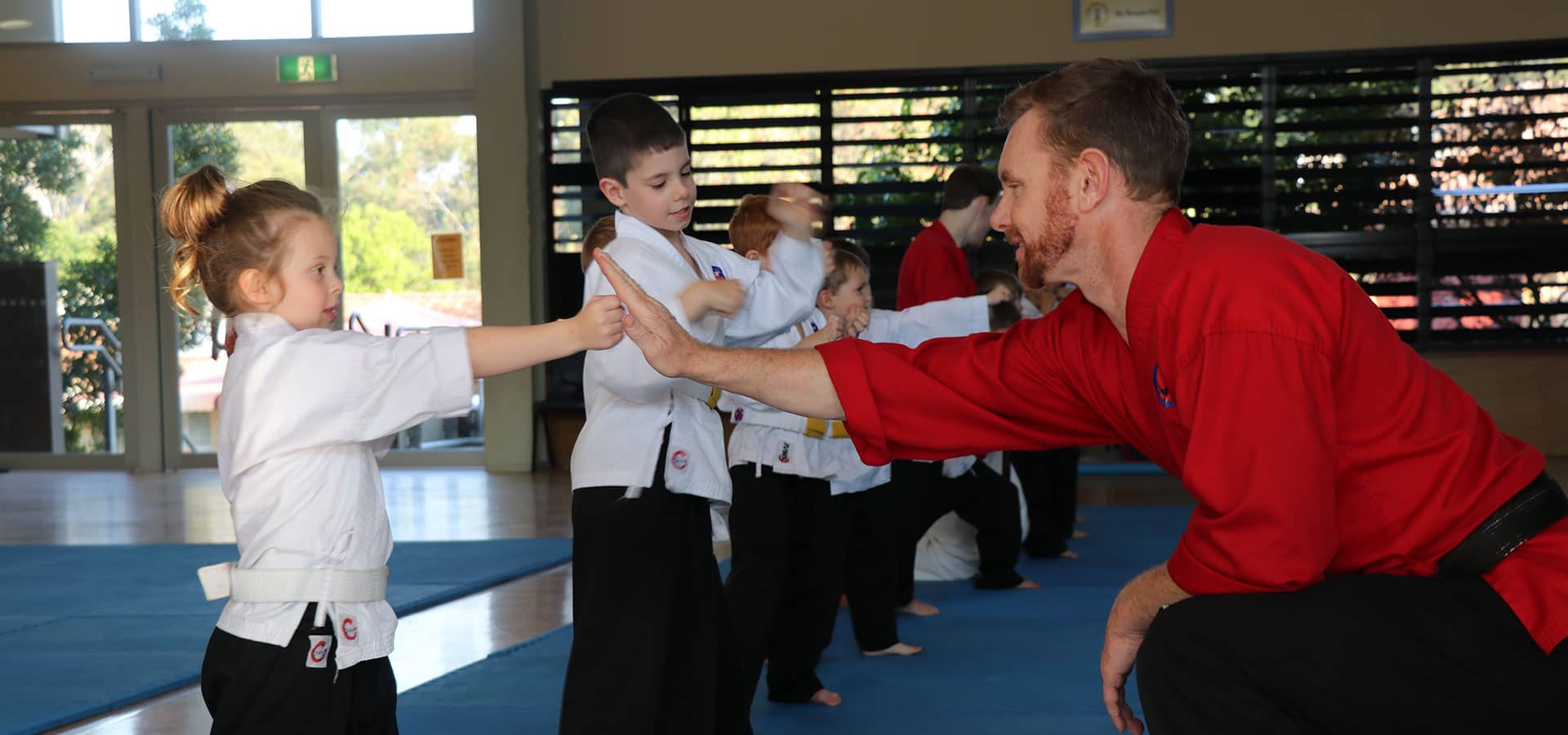
A child who finds it difficult to sit still is not necessarily lazy, naughty or incapable of concentrating. Sometimes they need the right environment and a worthwhile reason to practise directing their attention.
So, can martial arts improve children’s focus?
Martial arts is not a quick fix, and it does not replace professional support where that is needed. However, well coached training gives children regular opportunities to listen, remember instructions, manage distractions and return to a task after making a mistake.
At Southern Cross Martial Arts, we have spent more than 20 years refining how we teach these skills to different age groups. We do not expect a three year old, an eight year old and a teenager to concentrate in the same way.
A child can be standing quietly without really listening. Another child may be moving constantly but still understand exactly what is happening.
Real focus includes:
These are skills that can be practised, just like balance, coordination or a martial arts technique.
In class, children have an immediate reason to pay attention. They want to copy a movement, hold pads safely, remember a sequence, help a partner or succeed in a game. Focus becomes useful rather than something adults simply tell them to do.
Younger children learn best through short explanations, movement and structured play. In our early learning and Junior Dragons programs, focus might mean standing on a designated spot, responding to the instructor, waiting briefly for a turn or remembering one or two steps.
These may seem like small achievements, but they are important foundations.
As children grow, the expectations increase. Red Dragons can follow longer combinations, take more responsibility for their training partner and make adjustments after receiving feedback.
Teenagers need greater technical depth and physical challenge. They are capable of concentrating for longer, but the training still needs to feel meaningful. Giving them genuine skills, responsibility and measurable progress helps hold their attention far better than repeatedly telling them to focus.
SCMA does not teach exactly the same type of lesson every week. Our freestyle curriculum rotates through eight important skill areas:
This variety keeps training interesting while repeatedly asking children to use their attention in different ways.
Kata requires students to remember sequences and details. Padwork demands timing, listening and cooperation. Throwing and ground defence require body awareness and care for a partner. Sparring and agility develop decision making while moving.
The activities change, but the expectations remain consistent. Listen, practise safely, respect your partner and keep trying.
Focus becomes much harder when a child is frustrated, nervous or physically uncomfortable. That is why emotional regulation is part of martial arts training.
From approximately eight years of age, we introduce breathing and calming practices within our programs. This is particularly valuable in Brazilian Jiu Jitsu.
Being held in a safe, controlled position can feel stressful. Pressure across the chest or abdomen can also make breathing feel more difficult. If a student panics, holds their breath and uses all their energy at once, the situation usually becomes harder.
With coaching, they learn to pause, control their breathing, assess their position and work through the correct escape. They are learning a martial arts skill, but they are also practising how to think while under pressure.
The goal is not to remove stress completely. It is to help students respond to manageable stress with greater control.
Children will forget instructions, lose their place in a sequence and become distracted. Those moments are not proof that training has failed. They are opportunities to practise returning their attention.
Our instructors aim to correct students clearly without embarrassing them. A child may be reminded to reset their stance, look at the demonstration, take a breath or try the movement again.
Over time, children learn that making a mistake does not mean the task is over. They can listen, adjust and have another attempt.
This connection between focus and persistence is important. Concentration is not only staying attentive when something is enjoyable or easy. It is also returning to the task when success does not come immediately.
SCMA’s character education is not left to chance. Through Chat on the Mat, instructors explore qualities such as focus, confidence, discipline, self control, resilience, responsibility and integrity.
The discussion is adjusted for different ages and connected to situations children understand. We may ask how they can refocus after becoming distracted, what helps them listen at school, or what they can do when frustration makes them want to quit.
These short conversations give children language for the behaviours they are already practising physically.
Changes do not happen at the same speed for every child. Parents may initially notice small signs, such as their child:
Skills developed in martial arts do not automatically transfer to every part of life. However, regular training gives families practical examples they can reinforce at home.
Instead of simply saying, “Focus!”, parents can use a more useful prompt:
Take a breath. What is the next thing you need to do?
Regular attendance is more valuable than expecting one exceptional class to create change. Familiar routines, instructors and training partners allow children to settle and gradually take on greater challenges.
After class, consider asking:
These questions place attention on learning and effort rather than only belts, winning or performing perfectly.
Parents should look for age specific instruction, clear safety expectations and a balance between encouragement and accountability.
A good children’s class should be enjoyable, but it should also have structure. Beginners should feel welcome, instructors should correct behaviour respectfully, and activities should suit each child’s age and development.
At Southern Cross Martial Arts, our aim is not to make every child behave or learn in exactly the same way. It is to provide a safe, positive environment in which each student can practise listening, regulating their energy, meeting challenges and returning their attention to what matters.
Focus rarely develops because a child is told to concentrate harder. It develops through repeated experiences of listening, trying, adjusting and succeeding, one manageable challenge at a time.