
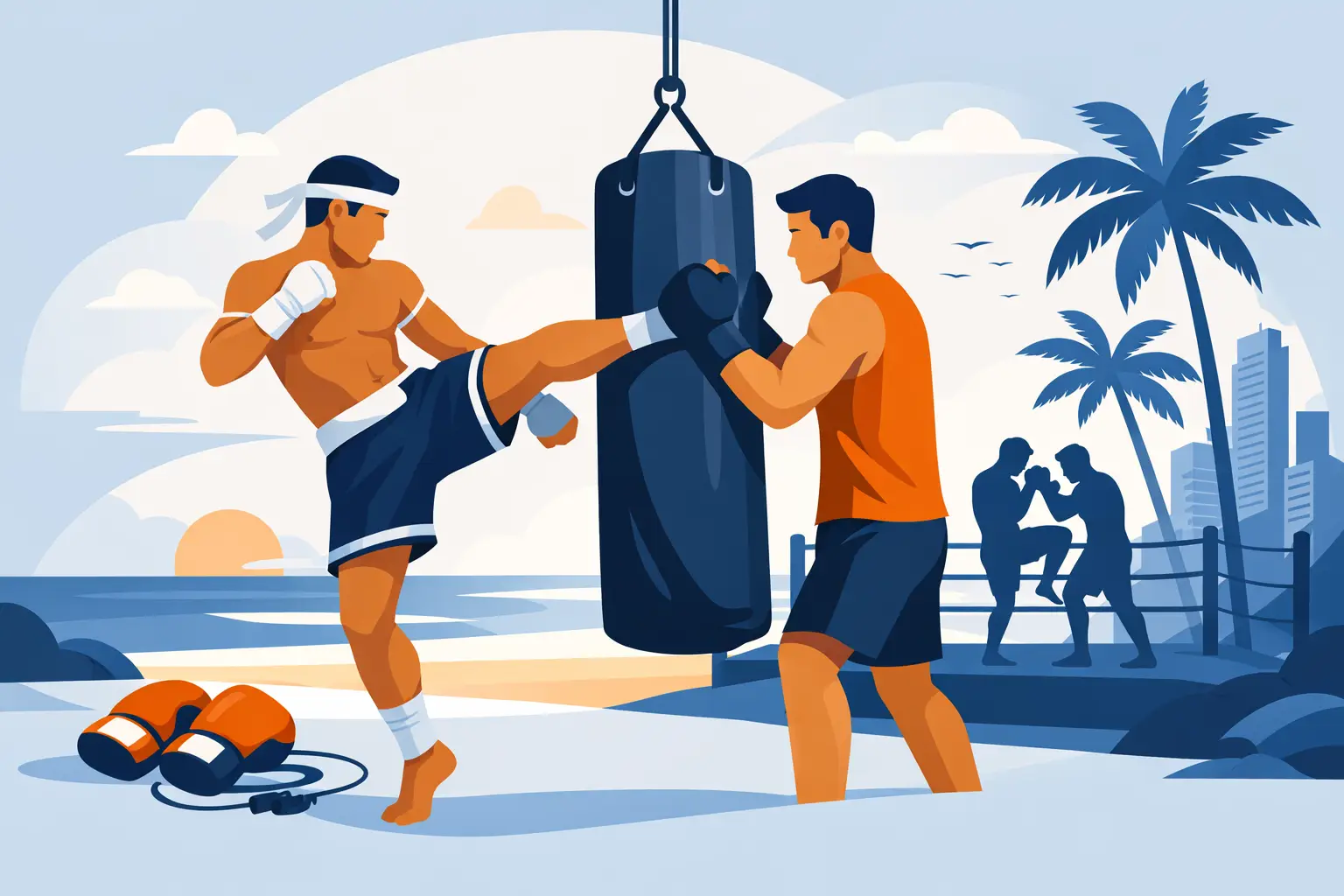
A good Muay Thai class should leave you feeling challenged, supported and keen to return. Not overwhelmed, injured or unsure where you fit in. For teenagers and adults, Muay Thai offers a purposeful way to build fitness and confidence while learning a respected combat sport with practical striking skills.
The appeal is easy to understand. Training combines punches, kicks, knees, elbows and clinch work into sessions that are active, technical and rewarding. But the real value comes from consistent coaching: learning how to stay calm under pressure, listen carefully, keep working when a drill becomes difficult, and treat training partners with respect.
Muay Thai is often called the art of eight limbs. But in reality, it would be more fitting to call it the art of 8 weapons. It uses hands, shins, knees and elbows. It is a complete striking system, but quality training is about much more than hitting pads hard. Students learn stance, balance, distance, timing, defensive movement and controlled combinations before intensity is increased.
The clinch is another defining feature. This close-range position teaches posture, control and awareness while creating opportunities for knees and off-balancing. It can be physically demanding, yet it also develops patience and composure. You cannot rely on wild movement or brute strength when good technique and positioning are required.
For people used to a standard gym routine, that technical element can make training easier to stick with. Each class has something to improve, whether it is turning the hip through a kick, keeping the hands up after a combination, or moving with better control. Progress is visible over time, but it is earned one session at a time.
Beginning Muay Thai can feel intimidating if your only reference point is professional fights online. A beginner class should look very different. New students need clear instruction, manageable drills and a respectful environment where it is normal to ask questions and make mistakes.
The first lessons generally focus on the foundations: a balanced stance, safe guard, basic footwork and simple punches and kicks. Pad work gives students a chance to practise technique with a partner, while conditioning builds gradually around their current fitness level.
Nobody needs to arrive already fit, flexible or experienced.
Controlled partner drills are useful because they teach awareness and timing, but they should always match the student’s stage of development. Hard sparring is not a requirement for someone who wants fitness, confidence and technical skill. For those who do want to explore sparring, it should be introduced responsibly, with protective equipment, clear rules and instructors who prioritise control over ego.
That distinction matters for parents of teens as well as adults returning to exercise. The right class should feel challenging without being reckless. Students make the best progress when they can train consistently, recover well and trust the people around them.
Muay Thai training can improve cardiovascular fitness, coordination, mobility and whole-body strength. Rounds on pads and bags elevate the heart rate quickly, while repeated movement patterns build endurance through the legs, core and shoulders.
Because sessions involve learning as well as working hard, the effort has a purpose beyond simply counting calories.
It also suits people who struggle with motivation in conventional gyms. Rather than deciding which machine to use next, students follow a structured class led by an instructor. They work alongside others, receive feedback and finish with a genuine sense of having learned something.
Results will depend on attendance, effort, sleep and recovery. Training two or three times each week will generally build stronger habits than an occasional intense session followed by a long break. For adults balancing work and family commitments, a realistic routine is more valuable than an ambitious plan that cannot last.
Confidence is not built by telling someone they are capable. It grows when they repeatedly do things that once felt unfamiliar. The first time a student holds pads, learns a combination or completes a tough round, they gain evidence that they can adapt and improve.
For teenagers, this can be especially valuable. Muay Thai creates a constructive outlet for energy and stress while asking students to be accountable for their attitude. They learn to take correction without taking it personally, support training partners and keep their focus when they are tired.
The goal is never to encourage aggression. Good martial arts instruction helps students recognise that capability and self-control belong together. A person who can stay composed, use their voice clearly and avoid unnecessary conflict is better prepared for everyday challenges than someone who has only learnt to react.
Muay Thai is a powerful striking art, but it is not the only part of practical martial arts training. Real situations and sporting goals can differ greatly. Someone interested in competition may want to refine their striking rounds, while another person may value self-defence skills, fitness and confidence. A teenager may simply need a positive place to train after school.
Cross-training provides useful perspective. Karate can strengthen movement, discipline and foundational striking. Brazilian Jiu Jitsu and wrestling develop confidence when distance closes or a situation goes to the ground. Throwing and practical self-defence training help students understand balance, control and safe decision-making.
At Southern Cross Martial Arts, Muay Thai sits within this broader training approach.
Students can build strong striking skills while also developing an understanding of ground wrestling, throwing and realistic self-defence principles. It is not about trying to learn everything at once. It is about giving committed students a pathway that can continue to grow with them.
Technique matters, but culture matters just as much. Before committing to a Muay Thai class, consider whether the academy has experienced instructors, clear safety standards and a structured progression system. Watch how coaches speak to beginners and how more experienced students treat newcomers.
A positive training environment has high standards without humiliation. Instructors should correct technique clearly, encourage effort and make safety non-negotiable. Students should be able to train hard while knowing that respect is expected from everyone in the room.
Location and timetable are practical considerations too. The best programme is one you can attend regularly. Access to multiple training locations can make it easier for families and working adults to keep their routine going when schedules change.
For parents choosing a class for a teenager, ask about age suitability and supervision. Teenagers benefit from training with peers who are at a similar developmental stage, particularly when contact drills are involved. They need room to work hard, but also coaching that reinforces discipline, emotional regulation and good judgement.
The first month is about showing up, listening and learning the rhythm of class. Wear comfortable training clothes, bring water and arrive a few minutes early so you can settle in. If you have an old injury, asthma or any health concern, let the instructor know before training begins.
Try not to measure yourself against the most experienced person on the mats. Every capable martial artist started with unfamiliar footwork, awkward combinations and tired legs. Focus on one or two coaching points each class. Small adjustments become reliable habits when they are repeated.
Recovery deserves attention as well. Eat well, drink enough water and allow your body time to adapt, particularly after your first few sessions. Soreness is common when you begin a new activity, but sharp pain and persistent discomfort should not be ignored. Good training means learning when to push and when to speak up.
Muay Thai can be a serious sport, a demanding fitness outlet or the start of a long martial arts journey. Whatever brings you through the door, the most worthwhile progress comes from a safe class, patient coaching and the decision to keep turning up for yourself.