
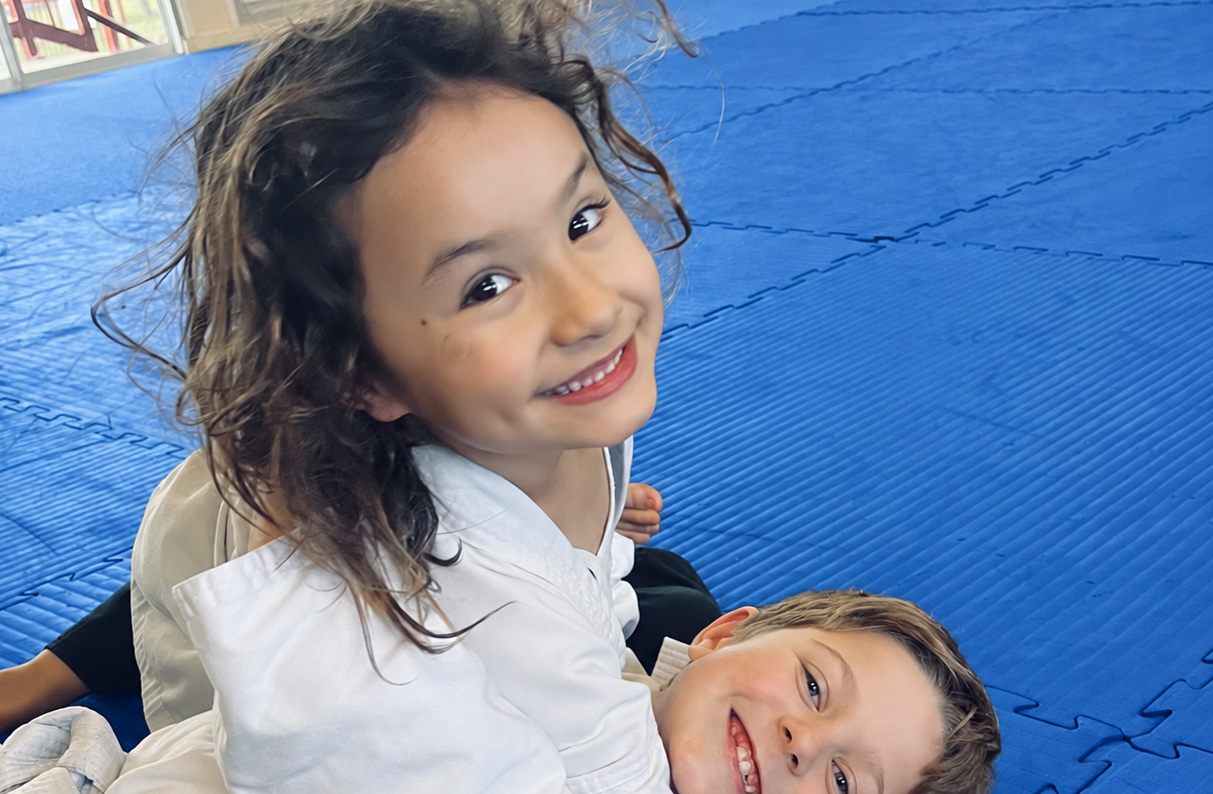
A child comes home saying they practised escapes, holds and how to tap when they were caught underneath a partner. For some parents, that can sound more concerning than reassuring. So, is BJJ safe? The honest answer is that Brazilian Jiu Jitsu can be a safe and valuable activity when it is taught with structure, close supervision and age-appropriate expectations. It is not risk-free, but neither is football, netball, skateboarding or an energetic game in the backyard.
The difference is in how a class is run. Good BJJ training does not ask beginners to prove how tough they are. It teaches them how to move, work with a partner, recognise pressure, communicate clearly and stop early when something does not feel right. Those habits are central to safety, not an optional extra.
For children, safe BJJ starts with a coach understanding that children are not small adults. Their attention spans, coordination, confidence and physical development are all still changing. A useful class meets them where they are, then builds skills progressively.
At an early stage, children may learn balance, safe falling, movement on the ground, simple positional games and controlled ways to create space. They should not be expected to perform complex submissions, train at adult intensity or cope with excessive pressure from a much bigger partner. The aim is to develop awareness and control while keeping training enjoyable.
Partner selection matters as well. Children learn best when paired sensibly by size, maturity and experience where possible. Coaches also need to stay active on the floor, rather than demonstrating a technique and leaving children to work things out without guidance. A well-run class has clear boundaries: when to start, when to stop, how to take turns and what respectful training looks like.
There will still be ordinary bumps, tiredness and occasional frustration. Learning a new physical skill involves mistakes. The goal is not to remove every challenge, but to create an environment where challenge is appropriate and children know that asking for help is a sensible choice.
BJJ is a grappling art. Instead of relying mainly on strikes, students learn how to manage distance, control positions, escape from holds and use leverage. That does not make it harmless, but it can make training more controlled than activities where contact is fast, unpredictable and aimed at scoring through impact.
One of the most useful lessons in BJJ is that strength is not the only answer. Students learn to use posture, timing, balance and technique. For a smaller child, teenager or adult, that can be a constructive way to build confidence without teaching them that they need to overpower someone.
BJJ also gives students regular practice in physical boundaries. They learn to tap – a clear signal that means stop – and, just as importantly, to release immediately when a partner taps. They learn that training partners are not opponents to be hurt. They are people helping each other improve.
That lesson carries beyond the mat. Respecting a boundary, managing disappointment after being swept or pinned, and returning to practise a difficult skill are all forms of self-control. They do not solve every social or emotional challenge a child may face, but they are worthwhile experiences to practise in a supportive setting.
It is reasonable to ask direct questions about injuries. Common BJJ issues can include minor bruises, mat burns, sore fingers or toes, and muscle soreness after unfamiliar movement. More significant injuries, such as sprains or joint injuries, can occur, particularly when students move too quickly, resist a position without control or ignore a tap.
There are also hygiene considerations. BJJ involves close contact, so clean mats, clean uniforms, covered cuts and sensible illness policies matter. Students should arrive in clean training clothes, keep fingernails and toenails short, and let a coach know about any skin issue, injury or medical condition that may affect training.
For adults, the biggest safety mistake is often trying to train as though they already have the fitness, mobility or recovery of their younger selves. A new student does not need to win every round. Starting steadily, choosing appropriate partners and being willing to sit out when something hurts is far more productive over time.
Teenagers can face a different version of the same problem. They may feel pressure to keep up with friends or prove themselves. A strong coaching culture makes it clear that control is a sign of maturity, not weakness. Training hard has a place, but it must be earned through sound movement, technical understanding and consistent respect for partners.
Parents and adult beginners do not need to be BJJ experts to recognise good safety practices. Watch how the instructor speaks to students. Are instructions clear? Does the coach correct unsafe behaviour promptly and calmly? Are students encouraged to work with control, or praised only for being aggressive?
A quality class teaches safety as part of each skill. For example, an escape should include how to protect the head and neck, where to place hands safely and when to pause. A hold should include where pressure belongs, what is not permitted and how quickly to let go when a partner taps. Sparring, often called rolling, should be introduced with rules and supervision rather than treated as a free-for-all.
At Southern Cross Martial Arts, martial arts training is structured around progressive skill development. This matters because a student who understands the foundations is less likely to rely on panic, roughness or guesswork. Across practical martial arts training, students can develop ground defence, throwing, wrestling, striking and fitness skills, but each area needs appropriate pacing and coaching.
For younger students especially, games and drills can be a valuable teaching method when they have a clear purpose. They help children learn balance, movement, listening and cooperation while reducing the urge to use uncontrolled force. Fun and discipline are not opposites. A class can be enjoyable while still holding students to high standards of behaviour.
Safety is a shared responsibility. The coach sets the standard, but students and parents help protect the training environment through everyday choices.
Students should tap early, not wait until a joint is painful or breathing feels restricted. They should tell a coach straight away if they feel dizzy, unwell or injured, and avoid training through sharp pain. Being a good partner means applying techniques gradually, giving others room to learn and releasing immediately when asked.
Parents can help by making sure children are rested, hydrated and wearing clean, suitable training gear. It is also useful to ask a child what they learned, who they worked with and how the class felt. These conversations show that safety and effort both matter.
If your child is nervous about close contact, that does not automatically mean BJJ is unsuitable. Many beginners need time to become comfortable with personal space, rolling and being underneath another student. A patient coach can provide gradual exposure and suitable partners. On the other hand, if a child repeatedly appears distressed, has an injury that needs assessment or is not ready for a particular activity, it is appropriate to pause and discuss options.
The safest class is not the one where nobody ever feels challenged. Martial arts should ask students to concentrate, persist and learn from mistakes. A child may find it frustrating when a partner escapes their hold. An adult may be surprised by how demanding a few minutes of grappling can be. Those are normal parts of learning.
The question is whether the challenge is productive. Students should leave feeling stretched, supported and clearer about what to practise next, not frightened of training or pressured to ignore their limits. Over time, careful training can improve coordination, fitness and body awareness while giving students a practical outlet from screens and daily stress.
BJJ is safest when it is approached as a long-term practice rather than a test of courage. Find a class that values control, good judgement and respect as highly as technique. Then allow the confidence to grow through steady practice, one safe round at a time.