
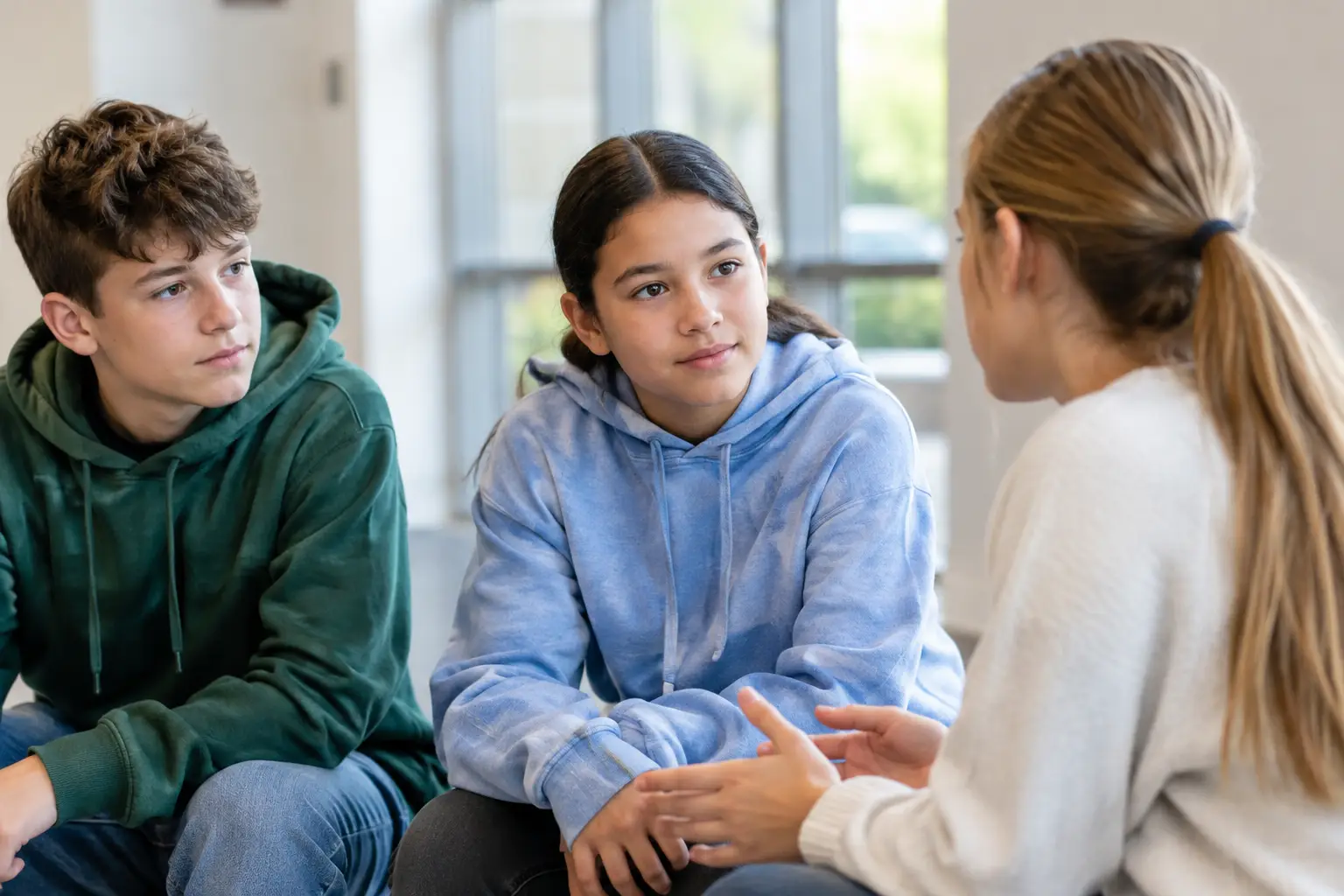
A disagreement can change quickly in the schoolyard, on a group chat, at sport or while hanging out with friends. One careless comment, a look taken the wrong way, or an audience urging someone on can turn a small problem into a bigger one. Teen conflict de-escalation skills give young people another option: creating enough space to think before they react.
For parents, this is not about expecting a teenager to stay perfectly calm all the time. Adolescence comes with strong emotions, changing friendships and growing independence. It is about helping them practise responses that protect their safety, dignity and relationships when pressure is high. For teens, it means learning that walking away, speaking firmly or asking for help can require more strength than joining an argument.
De-escalation is the ability to lower the intensity of a tense situation rather than add to it. It does not mean giving in, pretending poor behaviour is acceptable, or failing to stand up for yourself. It means recognising when an interaction is becoming unsafe or unproductive, then choosing a response that gives everyone the best chance to settle.
A teenager may need to notice the physical signs first: a tight jaw, clenched hands, a racing heart, the urge to shout, or the feeling that they have to respond immediately. Those signs are useful information. They do not mean a young person has failed. They are a cue to pause.
From there, practical de-escalation may involve using a calm voice, keeping an appropriate distance, avoiding insults, and choosing simple words. It may also mean leaving the area, moving towards trusted adults or friends, or reporting ongoing behaviour. The right response depends on the setting and the level of risk. If there is a real threat of harm, getting away and seeking adult support matters more than trying to talk the other person down.
Teenagers are often managing conflict in front of an audience. Friends may be watching in person, messages can be shared quickly, and social media can make a disagreement feel public and permanent. In that moment, backing down may feel embarrassing, even when it is clearly the smarter choice.
There is also the simple fact that emotional control is a skill developed through repetition. Knowing the phrase “stay calm” is very different from staying composed when someone is provoking you. Adults have the same challenge. Young people need chances to practise recognising their reactions in lower-pressure situations, where a mistake becomes feedback rather than a serious consequence.
This is one reason structured activities can be valuable. A good martial arts class does not just ask students to work hard physically. It creates clear routines around listening, taking turns, responding to instruction and resetting after frustration. Those habits can support the way a teenager handles everyday pressure, although they are not a substitute for family support, school processes or professional help when those are needed.
The most useful first skill is often a short pause. A teenager does not need to produce a perfect speech. They need a moment to stop feeding the conflict.
That might look like taking one breath before replying, dropping their shoulders, unclenching their hands, or counting silently before sending a message. In person, it can mean stepping back rather than stepping forward. On a mobile, it can mean putting the phone down for ten minutes instead of firing back.
Parents can make this practical at home by talking through ordinary examples. “What could you do if someone keeps trying to get a reaction from you?” is more useful than a broad lecture after the event. Help your teen find wording that sounds like them, such as: “I’m not doing this,” “Leave it,” or “I need some space.” Short sentences are easier to use when emotions are running high.
A pause will not solve every disagreement. Some people may continue to provoke, follow or threaten. But it gives a young person a better chance to notice what is happening and make a safer decision.
Body language often speaks before words do. Squared shoulders, pointing, invading someone’s space and aggressive staring can make a tense situation worse, even if the words themselves are not particularly harsh. Conversely, standing balanced, keeping hands visible, maintaining personal space and speaking at a normal volume can communicate that a teen is not looking for a fight.
This is not about telling young people to make themselves small. It is about teaching calm, confident posture. A teenager can set a clear boundary without shouting. They can look aware and ready to leave without acting threatening.
Physical training helps students understand this difference. In age-appropriate martial arts practice, they learn balance, distance, controlled movement and respect for training partners. They also learn that power without control is not a mark of maturity. Technique needs discipline, judgement and accountability.
When it is safe to speak, clear communication can prevent a disagreement from becoming a contest. The goal is not to win the last word. It is to state a boundary and reduce opportunities for the other person to keep escalating.
Useful language is brief and direct. A teen might say, “Don’t talk to me like that,” “I said stop,” or “We can talk later when we’re both calmer.” Long explanations can sometimes invite more arguing, especially when the other person is looking for a reaction.
Tone matters too. Sarcasm, name-calling and public put-downs tend to keep the conflict alive. That does not mean teenagers should tolerate cruelty or pretend they are not upset. It means they can express themselves without handing more fuel to the situation.
Online conflict needs the same care. Screens make it easy to forget there is a person on the other side, and messages can be misunderstood. Encourage your teen to avoid responding while angry, keep evidence of concerning messages where appropriate, block or report persistent harassment, and bring a trusted adult into the situation early. They should not feel they have to manage serious online behaviour alone.
One of the strongest messages young people can learn is that they do not have to stay in every conflict. Leaving is not weakness when someone is becoming aggressive, when a crowd is gathering, or when calm communication is not working. It is good judgement.
Talk with your teenager about where they could go: towards a teacher, coach, venue staff member, parent or a group of supportive friends. Help them identify adults they trust before there is a problem. If bullying, intimidation or threats are ongoing, adults need to know so the issue can be addressed through the right channels.
There is a balance here. Parents naturally want to solve every difficult moment, while teenagers need room to build their own judgement. A helpful approach is to listen first, ask what happened, and work together on the next safe step. Avoid assuming every disagreement is the same. A one-off friendship misunderstanding needs a different response from repeated harassment or a credible threat.
At Southern Cross Martial Arts, the purpose of training goes beyond learning physical techniques. Students are challenged to use control, follow clear boundaries and treat others with respect. Those expectations apply whether they are working on striking, padwork, throwing, wrestling, ground defence or practical self-defence.
Teenagers learn that martial arts training is cooperative as well as demanding. They need partners to improve. That means paying attention, matching intensity appropriately, stopping when asked and accepting correction. Sparring and partner drills, when taught safely and progressively, can be particularly useful for practising composure. Students feel pressure, make decisions and learn to reset without treating every mistake as a personal challenge.
This does not mean martial arts makes conflict disappear or that every student responds in the same way. Confidence develops differently for each young person. Some need time to find their voice, while others need help slowing down and considering consequences. Consistent coaching, positive reinforcement and appropriate challenge give both types of student room to grow.
The most valuable lesson is not that a teenager can physically handle every situation. It is that they can stay aware, manage their response and make choices that reduce harm. With steady practice at home, school and in a respectful training environment, calm can become something a young person knows how to build when it matters most.